NAD+ has become a popular topic in conversations about nutrition, cellular function, energy metabolism, and healthy aging. But before looking toward supplements or other wellness options, it’s worth understanding something more fundamental: how the body makes NAD+ and which foods provide nutrients involved in that process.
NAD+, short for nicotinamide adenine dinucleotide, is naturally present in the body. Rather than being something you simply “get” from one food, NAD+ is produced and recycled through several biological pathways that rely on nutritional building blocks.
So, which foods and nutrients are associated with NAD+ production? Here’s a closer look.
Know About NAD+?
A Molecule Involved in Normal Cellular Processes
NAD+ is a coenzyme found throughout the body. It participates in numerous cellular reactions, including processes related to converting nutrients from food into usable energy.
The body can produce and recycle NAD+ using compounds related to vitamin B3, also known as niacin.
Because NAD+ is involved in normal cellular activity, researchers continue to study how nutrition, age, metabolism, and lifestyle may relate to NAD+ availability.
How Does the Body Produce NAD+?
It Starts With Nutritional Building Blocks
The body uses several pathways to maintain its NAD+ supply. These pathways can use different precursor compounds, including forms of vitamin B3 and tryptophan.
In simple terms, your body takes certain nutrients and uses a series of biochemical steps to produce NAD+.
This means supporting normal NAD+ metabolism is not about finding one “NAD+ superfood.” A varied eating pattern that supplies adequate nutrients provides the body with building blocks used across many normal biological processes.
Vitamin B3 and NAD+ Production
One of the Key Nutritional Connections
Vitamin B3 is closely connected to NAD+ metabolism.
Niacin and nicotinamide are forms of vitamin B3 that can contribute to pathways the body uses to produce NAD+. Vitamin B3 is available through many everyday foods, making it possible to obtain it through a balanced diet.
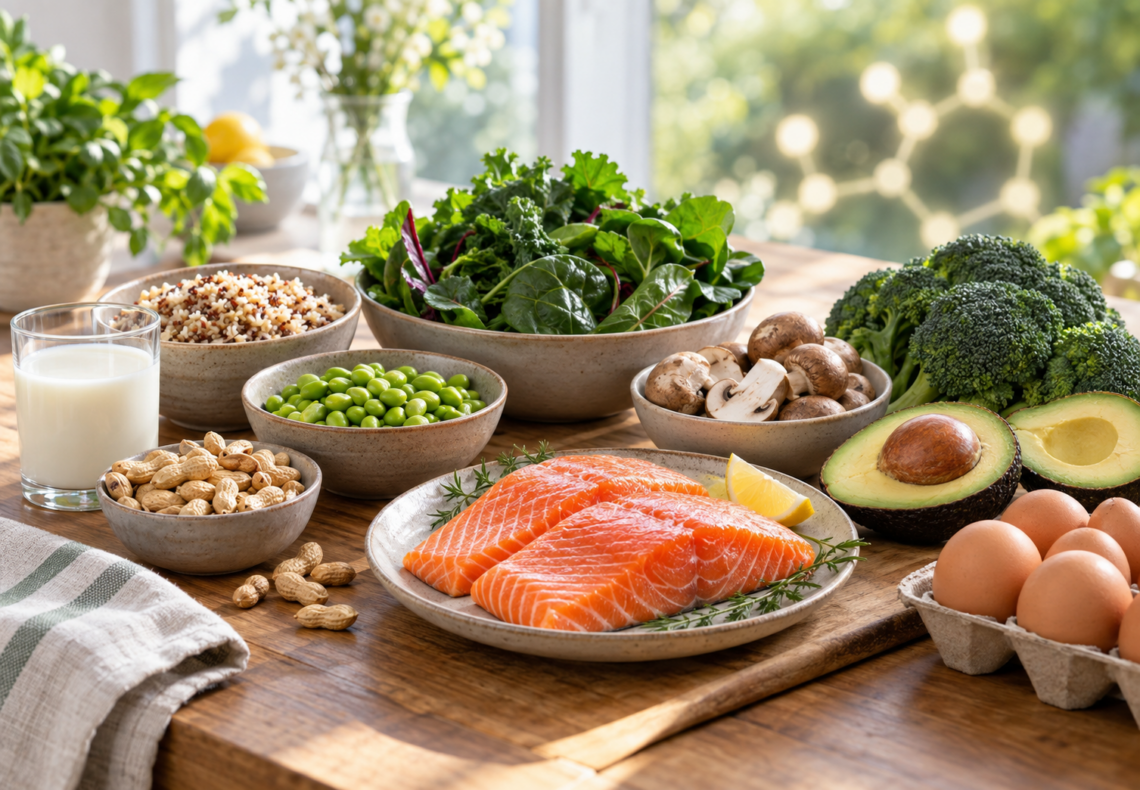
Food sources of vitamin B3 include:
- Poultry
- Fish
- Beef
- Peanuts
- Mushrooms
- Whole and enriched grains
- Certain legumes
Rather than focusing heavily on a single food, including a variety of nutrient-dense options can help provide vitamin B3 alongside other important nutrients.
Tryptophan Also Plays a Role
More Than Just an Amino Acid
Tryptophan is an essential amino acid, meaning the body needs to obtain it from food.
While tryptophan is involved in several biological pathways, the body can also use it as a starting material for producing NAD+ through a multistep process.
Foods containing tryptophan include eggs, poultry, fish, dairy products, soy foods, seeds, nuts, and legumes.
However, eating more tryptophan does not automatically mean your NAD+ levels will increase by a predictable amount. The body determines how nutrients are used based on many interacting factors.
Protein-Rich Foods and NAD+ Metabolism
Supporting the Bigger Nutritional Picture
Protein-rich foods can provide tryptophan and other amino acids involved in normal cellular functions.
Eggs, fish, poultry, lean meats, dairy products, beans, lentils, and soy-based foods can all contribute protein and other nutrients to a balanced eating pattern.
Protein is important for many functions beyond NAD+ metabolism, so the goal should not be to consume excessive amounts specifically to influence NAD+.
Your overall nutritional needs depend on factors such as age, activity level, health history, and dietary preferences.
Whole Grains and Legumes
Everyday Sources of Important Nutrients
Whole grains and legumes can also contribute nutrients associated with normal energy metabolism.
Brown rice, whole wheat, oats, beans, lentils, and peas can provide B vitamins, minerals, fiber, and plant-based protein.
These foods can fit naturally into a balanced diet without requiring a highly specialized “NAD+ diet.”
Can Fruits and Vegetables Support NAD+ Production?
Think Beyond One Specific Nutrient
Fruits and vegetables may not always be the richest sources of NAD+ precursors, but they remain an important part of a balanced wellness routine.
Vegetables such as mushrooms, green peas, potatoes, and certain leafy greens can provide B vitamins and other nutrients involved in normal metabolism.
Fruits and vegetables also provide fiber and a wide range of naturally occurring plant compounds.
When thinking about foods associated with NAD+ production, it is better to consider your overall dietary pattern rather than searching for a single food that promises a particular result.
Does Eating NAD+-Related Foods Directly Raise NAD+ Levels?
The Relationship Isn’t That Simple
It can be tempting to assume that eating more niacin- or tryptophan-rich foods will directly produce higher NAD+ levels.
Biology is more complicated.
The body continuously produces, uses, and recycles NAD+. Nutrient intake is only one part of this process, and individual factors can influence NAD+ metabolism.
This is why claims suggesting a particular food can dramatically “boost NAD+” should be viewed cautiously.
What About NAD+ Supplements and Wellness Options?
Understand the Difference Between Nutrition and Supplementation
Interest in NAD+ has expanded beyond food to include supplements and provider-guided wellness options.
These approaches should not be considered equivalent to obtaining nutrients from a balanced diet. Products can vary in formulation, amount, intended use, and available evidence.
If you’re considering an NAD+-related supplement or another wellness option, discuss it with a licensed provider, especially if you take medications, use other supplements, or have an existing health condition.
Build a Balanced NAD+ Wellness Routine
Focus on Consistency Rather Than Trends
Nutrition works best as part of a bigger picture.
Instead of building your entire diet around NAD+, focus on eating a variety of foods that provide protein, vitamins, minerals, fiber, and other essential nutrients.
A balanced routine may include lean proteins, fish, eggs, whole grains, legumes, nuts, seeds, fruits, and vegetables.
Regular physical activity, consistent sleep, hydration, and other everyday habits can also be considered as part of a broader wellness routine.
NAD+ and Nutrition: The Bottom Line
Start With the Basics
NAD+ is naturally involved in cellular metabolism, and the body uses nutrients such as vitamin B3 and tryptophan in pathways associated with NAD+ production.
Foods including poultry, fish, eggs, whole grains, legumes, nuts, seeds, and certain vegetables can provide these nutritional building blocks.
However, there is no single food that can guarantee a specific NAD+ level or wellness outcome. Rather than chasing “NAD+-boosting” foods, focus on a balanced and varied diet that provides the nutrients your body needs for normal function.